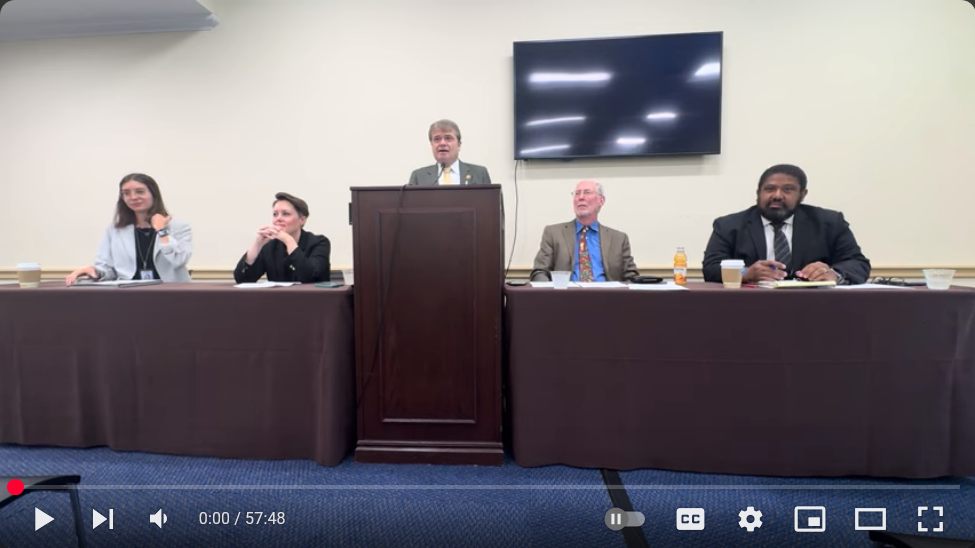
In a wide-ranging conversation hosted by the Congressional Transparency Caucus on Tuesday, June 10, 2025, lawmakers, watchdog organizations, and policy experts gathered to assess the current state of government transparency and identify practical reforms to restore public trust in federal institutions. (Video is available here.)
The event opened with remarks from caucus co-chair Rep. Mike Quigley (D-IL), who highlighted the American public’s declining confidence in government, citing a statistic that only 22% of Americans believe the government does what’s right always or most of the time. He also emphasized the need for legislative action, such as the reintroduction of the Access to White House Visitor Logs Act.
The panel featured three transparency leaders: Lauren Harper of the Freedom of the Press Foundation, Damien Brady of the National Taxpayers Union, and Jason Powell of Citizens for Responsibility and Ethics in Washington (CREW). The discussion was moderated by Courtney Buble of Law360. Together, they offered insights into critical transparency challenges across all three branches of government.
FOIA: A System Under Strain
Freedom of Information Act (FOIA) implementation was a recurring concern. Harper called the system “systematically broken,” citing staffing shortfalls and enforcement failures. Powell noted CREW’s ongoing litigation against the CDC and HHS for suspending their FOIA operations, while Brady pointed to the IRS’s lack of transparency as a growing problem. Panelists called for stronger proactive disclosure mandates and bolstered enforcement mechanisms.
Congressional Reform and Stock Trading Ban
The discussion also focused on legislative reforms, including proposals to ban congressional stock trading. Powell shared that a bipartisan framework supported by more than 10 organizations had been sent to House leaders, including provisions for blind trusts and bans on family trading. Brady emphasized how perceived conflicts of interest erode public trust, referencing online “trading whales” who track suspicious financial activity by members of Congress.
Federal Spending and Website Disappearances
Panelists criticized the recent removal of the OMB apportionments website, a key tool for tracking government spending. CREW is suing for its reinstatement, and Brady called the government’s justification “nonsense.” Harper highlighted the broader trend of datasets and entire websites being taken offline without explanation. The importance of independent Inspectors General and full staffing of watchdog offices also emerged as a top concern.
Modernizing Records Laws and Technology Use
Concerns were raised about the use of encrypted and disappearing messaging apps like Signal within federal agencies. Harper advocated for legislation banning such apps and reforming Title 44, which governs federal recordkeeping. She also called for more funding and independence for the Archivist of the United States, whose office is responsible for oversight.
Low-Hanging Fruit and Legislative Pathways
Each panelist offered ideas for achievable reforms in today’s divided Congress. Harper pointed to strengthening FOIA through existing bipartisan proposals, including posting unclassified IG reports and agency head calendars. Powell suggested expanding inaugural fund disclosure laws and codifying publication of White House visitor logs, including virtual meetings. Brady recommended bills to require CBO to calculate debt financing costs and improve reporting on subgrants.
The Role of Legislative Support Agencies
The panel concluded by emphasizing the vital contributions of legislative branch agencies like GAO, CBO, and CRS. Brady described the CBO as a critical source of nonpartisan analysis, while GAO was praised for identifying program failures and recommending improvements. CRS reports were noted as a valuable but underused public resource.
Calls for Oversight and Independence
Both Harper and Powell stressed the need for stronger congressional oversight of FOIA and Inspectors General. They urged lawmakers to hold regular hearings, ensure independence of oversight offices, and codify protections against political interference.
As Congress continues to navigate political gridlock and eroding trust, the panel offered a roadmap for achievable, bipartisan transparency reforms that would strengthen democratic accountability and public confidence in government.